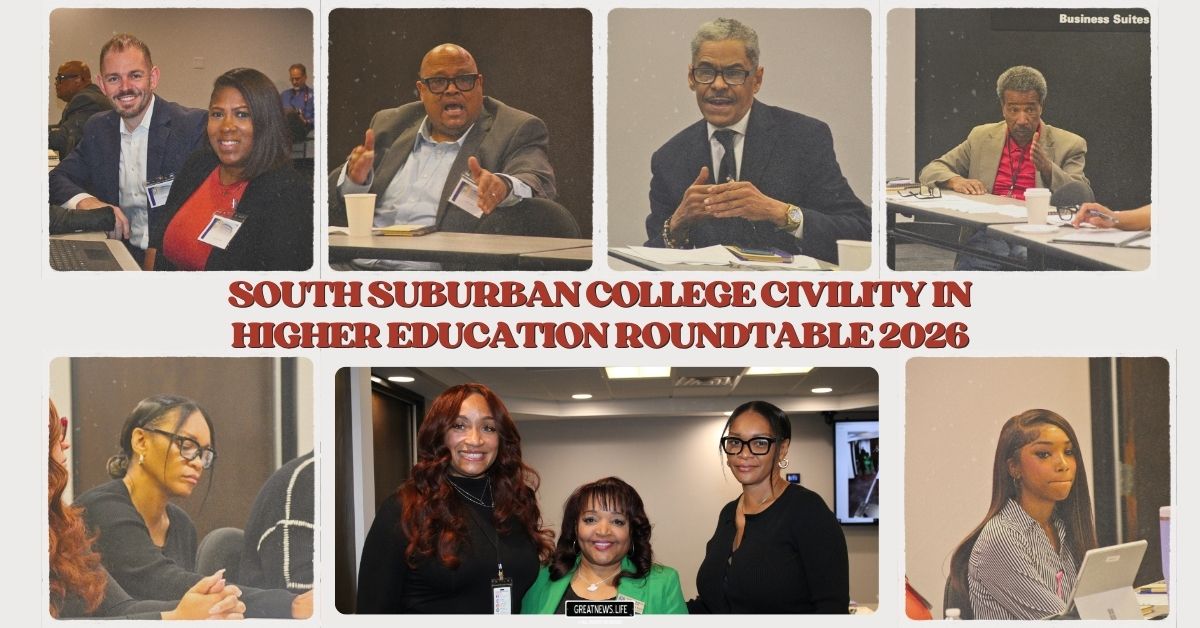
Leaders meet for South Suburban College’s Civility in Higher Education Roundtable

- By: Carlos Acevedo
- Last Updated: October 16, 2026





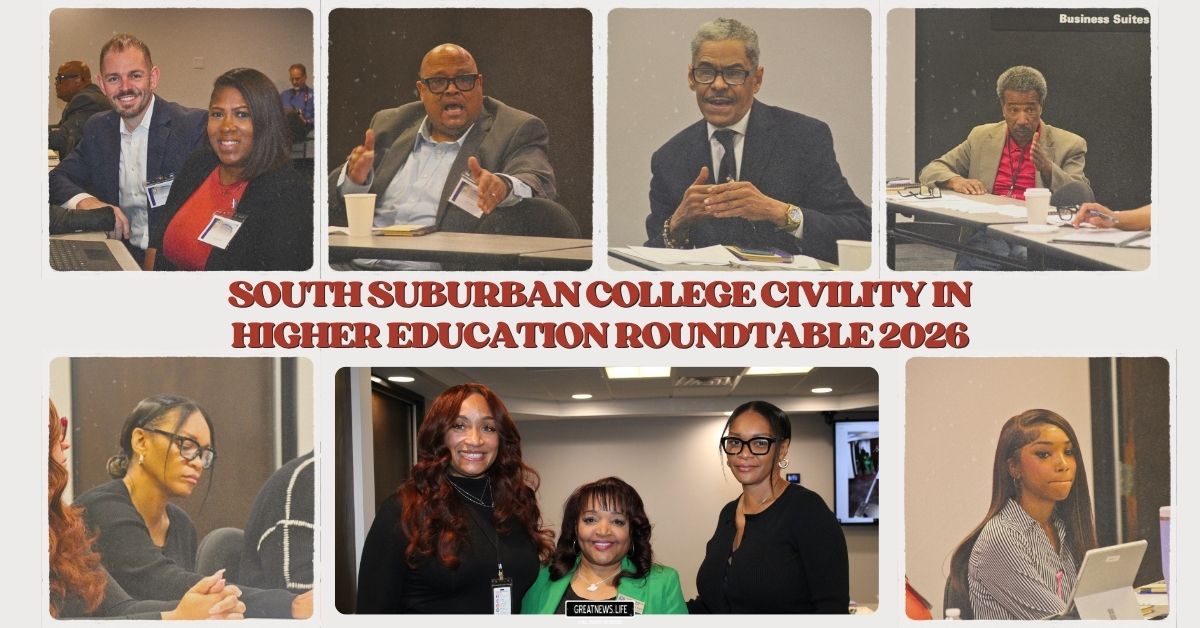
In an effort to foster a culture of respect, understanding and meaningful dialogue throughout the year, South Suburban College brought together college leaders, students and community stakeholders on October 15 for the Civility in Higher Education Roundtable.
The discussion served as a continuation of SSC’s Civility Awareness Month activities held throughout August, which included workshops, presentations, activities and ceremonies designed to encourage greater awareness of civility across the College and surrounding community.
However, the October roundtable was about moving beyond awareness.
The primary purpose of the gathering was to identify practical next steps for making civility an everyday part of the South Suburban College experience, not simply a topic emphasized during Civility Awareness Month.
“This is a follow-up meeting, a roundtable discussion to review what we can put into action and how we can put that into action through higher education,” said Vice President of Student Services Devon Powell. “We have our community leaders, college leadership, students, etc. We’re going to be discussing a variety of questions about how we can put civility into action for higher education.”
Among those participating were SSC administrators; SSC Trustees Kevin Daly, Rev. Anthony Williams and Tyhani Hill; Student Trustee Grace Ojo; Illinois State Senator and Thornton Township Supervisor Napoleon Harris; Nate Pendleton, father of the late Hadiya Pendleton; Dr. Cierra Whittaker of the Illinois Women’s Institute for Leadership; and Ramonde Williams, SSC Chief of Campus Police and Calumet City Alderman. Students and staff also contributed their perspectives to the discussion.
The diverse representation was intentional.
For SSC, civility is not solely an institutional issue. It is a shared responsibility that extends across classrooms, offices, campus spaces and the broader community.
“My role is student-facing; it is to ensure that students from all backgrounds here at South Suburban College are more comfortable and able to navigate different situations, as we know that conflicts arise in educational settings,” said Executive Director of Enrollment Management Tiffane Jones. “As soon as I feel comfortable navigating that, my staff is prepared to help them do so.”
Jones emphasized the importance of bringing individuals with different experiences and perspectives to the same table.
“We have people here from different, diverse backgrounds. We have faith-based and education-based. We have our student voices. It’s important to get everybody in one room so that we’re all on the same page,” she said.
Throughout the discussion, participants explored what civility means in practice and how colleges and communities can create environments where people feel respected, heard and valued, even when they disagree.
Dean of Student Development Dr. Anissa Jones challenged participants to consider civility as something deeper than simply being polite.
“Civility is more than being polite. It is how you navigate disagreements, exercise leadership, respond to injustice, and preserve the dignity of others,” she said. “We’re not here just to discuss what civility means, but to determine what is our responsibility in making it a practice within our institutions and in our community.”
The conversation also examined how individuals and institutions can help address behaviors that contribute to conflict and division, while creating opportunities for people to learn new ways of communicating and interacting.
Powell said the responsibility to advance civility begins with individuals and extends throughout organizations and communities.
“It can start with an individual in their respective institutions, organizations, and roles, to grow awareness about civility and how we can practice that in our everyday lives of work, and also share that information with others,” Powell said. “This is why we have various stakeholders at this meeting to have this discussion, so that they can take this back and put it into practice in their respective areas for their respective roles.”
SSC President Dr. Lynette Stokes emphasized the importance of creating opportunities for continued dialogue.
“I made a global announcement on my own questions about civility. ‘How do we treat each other? How do we respect each other? And how does that translate into what we’re doing in the classroom?’” Stokes said. “I asked and opened it up; if you want to have more conversation and dialogue around it, that’s where it changes and starts.”
That spirit of openness was central to the roundtable. Rather than treating civility as a once-a-year initiative, participants focused on how the College can incorporate civility into its everyday culture and practices.
The discussion lasted over an hour, but organizers emphasized that the conversation is intended to continue.
Participants were encouraged to consider not only what civility means, but what they personally can do to advance it in their respective roles.
“I hope everyone leaves with an understanding of different perspectives when it comes to civility,” Powell said. “That can also bring understanding in terms of the inclusion of different perspectives, but taking that back and putting that into action. They should ask, ‘What can I do now to put civility into my work in some way, in a practical way?’”
For South Suburban College, the October 15 roundtable represented an important next step; transforming a month of awareness into an ongoing commitment to how people communicate, lead, learn and engage with one another.
The message was clear; civility should not end when August does. It should be reflected in the everyday life of the College and the communities it serves.