USDA Fellow to expand opportunities for students in the research lab
- By: Indiana University Northwest
- Last Updated: August 26, 2025
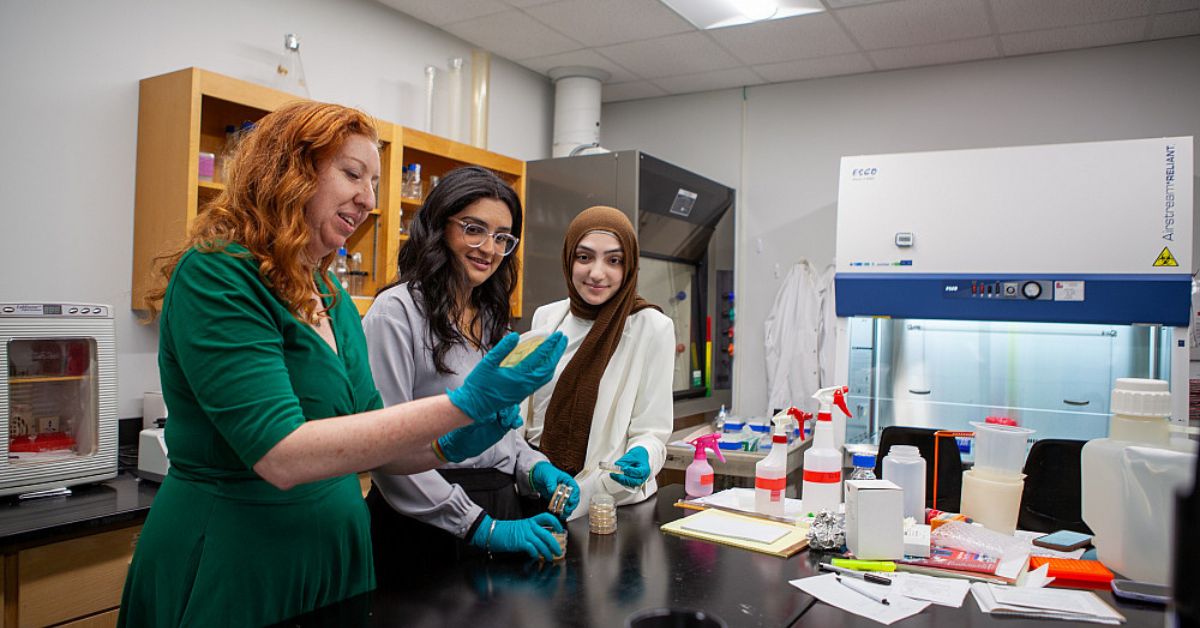
Jenny Fisher studies bacteria in weird places and how they impact environmental health and safety. Now an associate professor of biology at Indiana University Northwest, Fisher researches the impacts of fecal pollution from septic systems and combined sewer overflows on human health.
Fisher began her research in public health microbiology as a postdoctoral fellow at the University of Wisconsin-Milwaukee.
“When I came to be a professor here, I continued that research and expanded it to include antibiotic resistance,” she said. “We probably carry lots of antibiotic-resistant bacteria with us all the time, and as long as we’re healthy, it’s not a problem. But if we were to get sick, it could make those infections more difficult to treat.”
Fisher’s area of study is extremely relevant to the Gary community. Much of the sewer infrastructure is old and when the system gets overwhelmed, untreated sewer water often ends up in the Little Calumet River and possibly even Lake Michigan.
“That creates some potential health risks when you have people using beaches nearby,” she said.
Fisher’s excellence in research and education has not gone unrecognized. She was recently named a 2025 E. Kika De La Garza Science Fellow, a prestigious position with the U.S. Department of Agriculture (USDA).
Fisher was one of just eight educators nationwide selected to collaborate with USDA officials in Washington, D.C., to strengthen relationships and opportunities with Hispanic-Serving Institutions, like IU Northwest.
“It seemed like a really interesting thing to do, to learn more about what the USDA does, so I could bring that into my classroom,” Fisher said. “Before this experience, I only knew the tip of the iceberg.”
Following her time in the nation’s capital, her fellowship continued in Columbus, Ohio, where she spent a week collaborating with a team of scientists on the Ohio State campus. The scientists were working on soil drainage, and Fisher delved deeper into how this subject fits into her own research.
“The OSU scientists have some really cool, high-tech ways of collecting and measuring data about the water,” Fisher said. “I was really interested in learning about what types of analysis they do.”
But Fisher wasn’t just there to learn for herself — her microbiology background helped fill a gap in the Ohio State team’s expertise.
“They didn’t really have an in-house person who was focused on microbiology, especially the type that I do,” Fisher said. “It seems there are a lot of opportunities in the future to collaborate and work on projects. That was very exciting.”
Finding research opportunities for the future was a key goal of the fellowship. Fisher has grown her network and met some of the top scientists working with the USDA in the nation’s capital. Even after the fellowship concluded, conversations among the fellows remain active, and future collaborative opportunities are being discussed.
“We have plans to hopefully collaborate in the future, and there are a couple of people in the Chicago area who I can certainly work with,” Fisher said.
Fisher envisions undergraduates working hands-on in the research lab and contributing to projects that have a tangible impact on the community.
“We’ll be able to engage the students in projects and work, and the fellowship also gave me ideas about things that I could do locally,” she said.
For example, Fisher is thinking about the ways she could involve Soil and Water Conservation Districts and even local farmers through research opportunities.
“I’m thinking about how we engage those people in our research and how the USDA’s best practices might make a difference for water quality in our area,” she said.
Fisher also returned with a better idea of how to earn grants. Many of the other fellows had experience applying for USDA funding, and Fisher may be able to use her connections to learn more about what makes a successful grant application.
“The connections will be there,” she said. “That will mean a more regular conduit of information coming in about these opportunities.”
Thanks to this stream of information, Fisher can educate students about potential funding, internships and research projects. As she looks to the future, she is excited to strengthen her newfound relationships and get students more involved in the weird — yet wonderful — world of microbiology.