Bringing international expertise from IU Northwest to the UN
- By: Indiana University Northwest
- Last Updated: October 28, 2026


United Nations utilizes the international expertise of IU Northwest professors Bessie House-Soremekun, Anja Matwijkiw
Dr. Bessie House-Soremekun grew up in a small town in Alabama. There was only a post office, a few stores and churches, the local schools and a caring community. But even with her family’s love and support, House-Soremekun never would have predicted where her career would take her.
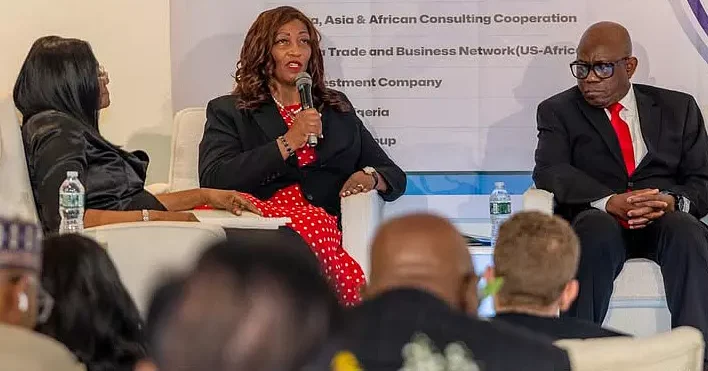
In September, the Chair of the Department of Social Sciences and Professor of African American and African Diaspora Studies spoke at the United Nations (UN) General Assembly High Level Global Executive Roundtable, taking the stage among other international experts in a wide range of fields.
House-Soremekun’s work is internationally recognized, and many of her interests connect directly to UN initiatives. Her presentation was focused on how entrepreneurship, economic development and partnerships can help communities, particularly in Africa.
“More than 80 percent of the workforce in Africa is in the informal economy. You see people out on the streets selling things and doing things. They’re very entrepreneurial, and so we want to help those people build and expand those businesses,” she said.
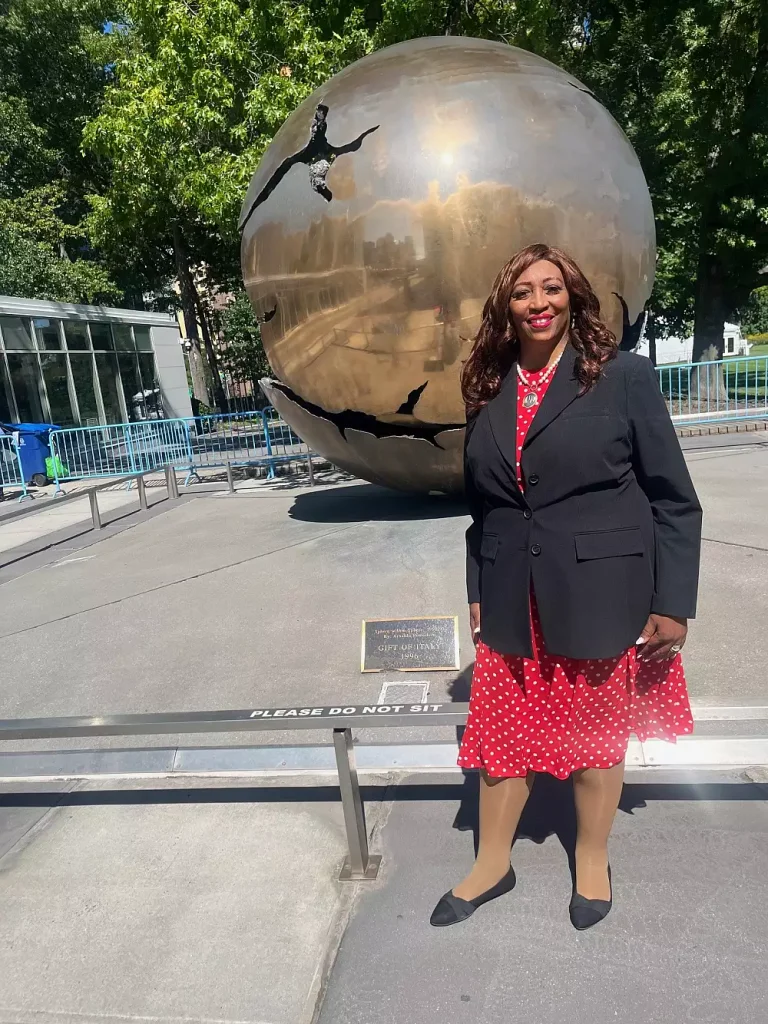
Though she’s trained in political science, House-Soremekun is no stranger to teaching entrepreneurship. Over the course of her career, she has created at least five entrepreneurial centers, which include the former Center for Global Entrepreneurship and Sustainable Development at IU Indianapolis. Under the umbrella of some of these centers, she created effective business training programs and helped numerous people to start new businesses and expand existing ones.
She’s found the key to building a successful business lies in forming partnerships. While working in Indianapolis, she also connected with a renewable energy company and investigated how their sustainable development practices could be used throughout the world.
“They had patents in the area of renewable energy, and so one of the conversations we had was about taking very large turbines to Africa and putting them in rural communities to produce numerous hours of electrical power, which is significant because Africa is still a region that experiences challenges with providing all of its citizens with electrical power,” she said.
House-Soremekun’s work on entrepreneurship and renewable energy meshes perfectly with UN Sustainable Development Goals for 2030, especially those centered around clean energy and economic growth. She was honored to have the chance to speak at the UN General Assembly High Level Global Executive Roundtable about these topics.
“I was really stunned to receive this invitation, and it’s a very humbling experience,” she said. “It would have to be one of the highlights of my life so far.”
It’s no wonder why the UN took notice of House-Soremekun. Her professional accomplishments are many, including seven published books (and more on the way), numerous journal articles and book chapters, grant awards nearing $1.5 million, and more than 50 honors, accolades and awards for academic excellence, research, community engagement and effective leadership skills. She is also the recipient of three Yoruba Chieftaincy titles, one of which was bestowed on her by a living Yoruba King in Nigeria, His Royal Majesty, King Michael Adedotun Aremu Gbadebo, the Alake and Paramount Ruler of Egbaland. And there are no signs of her slowing down.
In the weeks following her UN presentation, she’s feeling even more energized to continue her work and share her experience with IU Northwest students.
“Hopefully, we can create exchange programs where our students go to Kenya, Nigeria or South Africa to understand the cultural and historical development of these countries,” she said.
In addition to starting cultural exchange programs, she hopes to teach more courses on international political economy and Africa.
“There are so many things that can be done to expand students’ knowledge and understanding, not just from reading books, but from experience,” House-Soremekun said. “Get out into the world and build connections.”
Even with so many international connections and professional accolades, House-Soremekun hasn’t forgotten her roots. In fact, they’re in her name.
“I’m named for my grandmother, one of the most brilliant women I ever knew,” she said. “She went to college in the early 1900s and was ahead of her time. She would just be overjoyed and thrilled that I have come all this distance. My mother is also very happy about my career as well.”
House-Soremekun isn’t the only faculty member to have been called upon by the UN. Dr. Anja Matwijkiw, Professor of Ethics and Human Rights in the Department of Philosophy, has no shortage of experience working with the prestigious organization.
Over the years, she’s done work for international organizations associated with the UN, such as the International Progress Organization in Vienna. Matwijkiw has also published research with the UN University and, in 2025, she became a delegate for the European Public Law Organization.
Beyond those appointments, much of her academic work in human rights has been intertwined with the UN, everything from guest lectures abroad to panels at UN conferences discussing university education in the context of international norms.
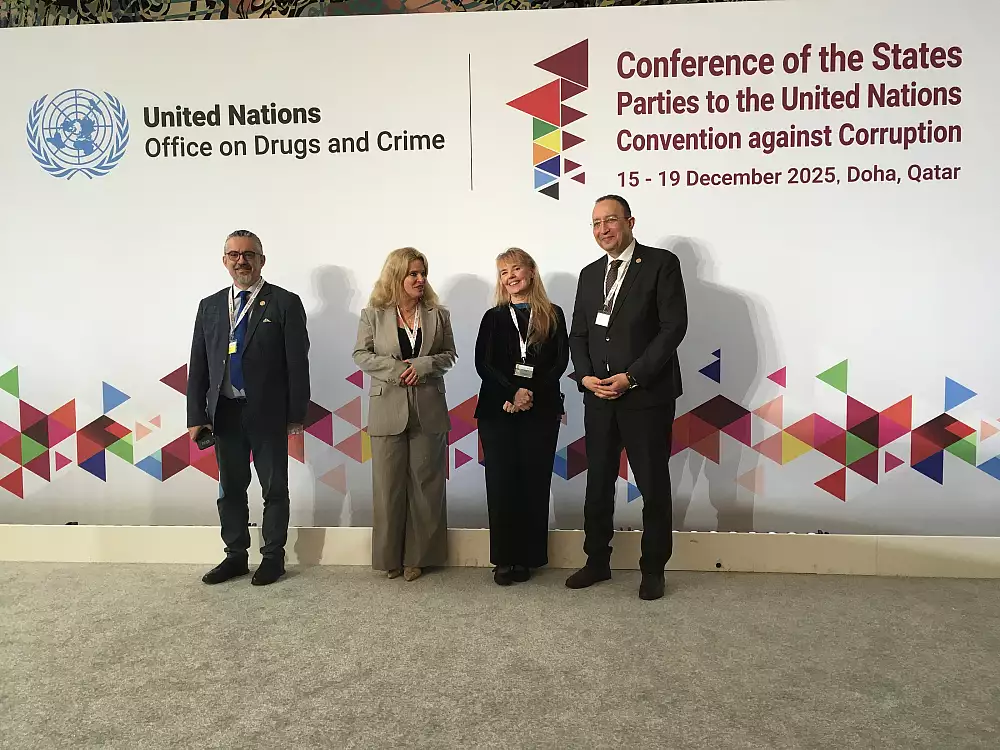
Dr. Anja Matwijkiw at the 11th Session of the Conference of the States Parties to the United Nations Convention against Corruption.“It’s difficult to tell when this all started because the United Nations was very much a part of everything I did in human rights, rule of law doctrine and legal theory. It was there from the beginning,” she said.
Most recently, Matwijkiw is working on topics as complex as gender apartheid.
“We are going to hopefully get an international treaty on crimes against humanity,” she said. “One of the nuts that I was asked to crack was gender apartheid. Should that be codified by analogy to racial apartheid?”
The question is complicated, with some arguing that codifying gender apartheid could hurt victims’ chances at justice. Matwijkiw said she’s still thinking through the issue from all sides. Meanwhile, her first research manuscript on the challenge has been accepted for publication in the Global Community Yearbook of International Law and Jurisprudence.
“Things happen incrementally, because however exciting a new development sounds, you need to use the brakes and think things through,” she said.
And who’s better at thinking things through than philosophers? Her international recognition is based on her interdisciplinary expertise.
While the UN is a global organization, Matwijkiw said there’s always a local connection, too. For one, the upcoming Men at the Margins conference got her thinking about her courses’ demographics.
“I thought about how I would like to see more male black students in my courses,” she said. “I wondered if they know about United Nations initiatives, such as the Declaration on the Human Rights of People of African Descent. They are relevant to the youth in our region. I think it would be a game-changer to see parallel work at the local level and our own students get actively involved.”
International human rights apply to everyone, and Matwijkiw believes there’s a place for just about any discipline when it comes to the UN. She hopes that, by sharing her international experience, students will feel inspired to learn more.
“Knowing your rights internationally, and at all levels, is very much about empowerment,” she said. “United Nations members come from all kinds of different places, and it gives you a different perspective. It’s necessary to be able to navigate the modern world.”
Matwijkiw and House-Soremekun themselves come from very different backgrounds and experiences. But it’s the combination of their unique expertise and perspectives that makes them qualified to take the stage at the UN and share their expertise both internationally and here at home.
