UnitedHealthcare promotes a healthier future in honor of Mental Health Awareness Month


- By: Alyssa Chartrand
- Last Updated: May 29, 2026






As Mental Health Awareness Month concludes, the collective conversation around well-being of young adults continues to be reshaped by proactive change.
National data from UnitedHealthcare and YouGov highlights the significant pressures facing today’s students and emerging adults. It also reveals an inspiring rise in resilience, awareness and community support.
UnitedHealthcare urges healthcare leaders, families and young adults to prioritize mental wellness through open dialogue, early intervention, digital tools and easier access to support.
“The most important dynamic is greater awareness and destigmatization,” said Dr. Anthony Dowidowicz, Chief Medical Officer for UnitedHealthcare’s Employer & Individual Health Plans of Illinois and NW Indiana. “The willingness to shine a light into some possibly dark corners is an important step, and I think we’re getting there now.”
The fourth annual Young Adult & College Student Behavioral Health Report, commissioned by UnitedHealthcare and conducted by YouGov, reveals that over 60% of young adults ages 18 to 28 experienced a mental or behavioral health issue within the past year.
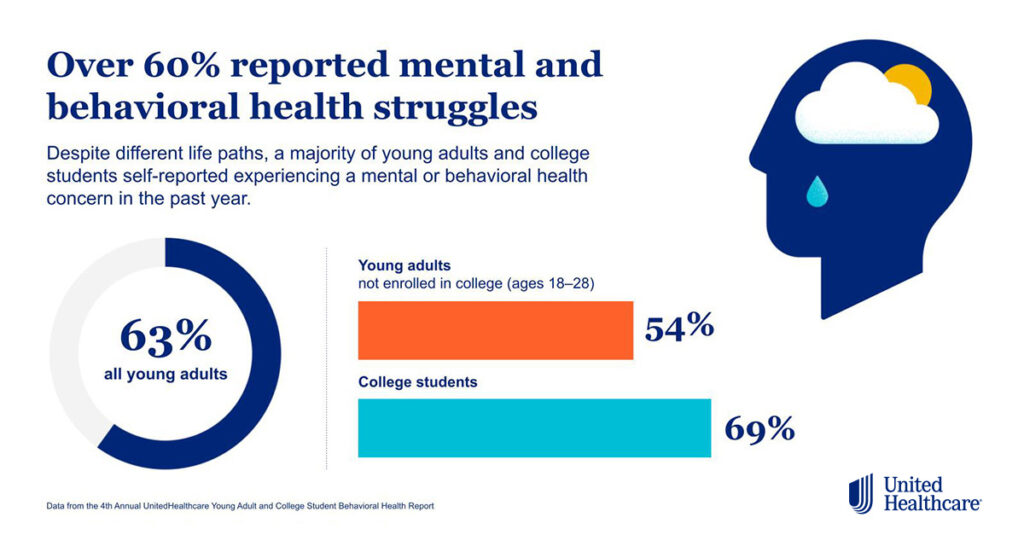
College students face the brunt of this crisis, with 70% reporting struggles compared to 54% of their peers not in school. The findings underscore the need for communities to address these rising rates of anxiety, depression and related conditions. The first critical step is destigmatizing the conversation to highlight these overlooked challenges. Local communities can cultivate a safe, supportive environment to ensure young adults receive timely help.
“We have a mountain of data that paints a concerning picture of how young adults are coping,” Dowidowicz said. “Rates of depression have been increasing and it can be a devastating illness. Most concerning are statistics on suicide. It’s sobering when you learn that suicide is the second leading cause of death in people ages 10 to 34.”
Many families face a difficult reality as parents and caregivers lack a modern playbook for the unique mental health pressures impacting emerging adults and youth. Previous generations navigated different societal stressors than today’s adults, who manage a constant influx of digital information, academic competition and shifting social dynamics that can exacerbate isolation. Parents often prioritize frequent check-ins to offer support, but lack the tools to navigate these complex hurdles. This creates a societal disconnect between good intentions and the specialized needs of the young adults.
“Parents want to check in with their kids frequently to be reassured,” Dowidowicz said. “Despite their best intentions, however, that doesn’t always mean they have the right tools to have effective conversations. We are dealing with a different set of pressures today — a constant, 24/7 digital environment that previous generations simply did not encounter.”
Another important part of support is recognizing that young adults often turn first to peers, support groups and other community-based resources. These options can help normalize conversations about mental health and create an additional layer of support alongside clinical care. As care models continue to evolve, expanding these options may help more young adults get help in ways that feel easy to access and more comfortable.
“I’m happy to say that we are starting to see a lot of innovation in care delivery models that will expand access and offer alternatives, but we aren’t quite there yet,” Dowidowicz said. “This includes support groups, crisis lines, and peer counseling. All of these things are becoming much more common.”
As a final step, individuals should proactively seek professional support when concerns arise. Determining the right time to reach out depends on the individual and their specific situation. Mental health struggles often remain invisible, and experts recommend erring on the side of caution. Early consultation acts as a vital safeguard before a crisis occurs.
Support can begin with a primary care physician, therapist or another trusted health care professional. Many people also have access to mental health resources through their health plans, including Employee Assistance Programs, virtual care and digital tools. While cost can be a concern, these options may offer meaningful options for support before problems become more severe.
“I’m cautiously optimistic and encouraged to see progress in some places expanding the scope of certain healthcare providers to accommodate these needs. On that point, we really have to be careful not to sacrifice quality,” Dowidowicz said.
The landscape of mental health continues to evolve and offers brighter paths toward wellness. UnitedHealthcare encourages young adults and others struggling with mental health conditions to remain proactive in navigating hurdles and to embrace every opportunity for personal growth.
Innovative technology and emerging AI tools continue to develop new, supportive avenues for connections in addition to traditional care. These digital resources serve best as a supplement rather than a replacement for professional guidance. By shifting from shame toward honest conversation, our local communities can illuminate the way toward a healthier and more resilient future.
“I think one of the more hopeful features of the younger generation right now is their openness about their mental health and positive views of seeking help,” Dowidowicz said. “They are supporting each other and helping to remove that stigma.”
For more information on navigating mental health, finding local resources, or exploring support programs, visit uhc.com/health-and-wellness/mental-health. Anyone in need of immediate support can call or text 988 to connect with the Suicide & Crisis Lifeline for free, confidential assistance 24/7.
