Survivor Series: Mel Shelby Bendle
- By: Ellen Kerr
- Last Updated: January 25, 2026





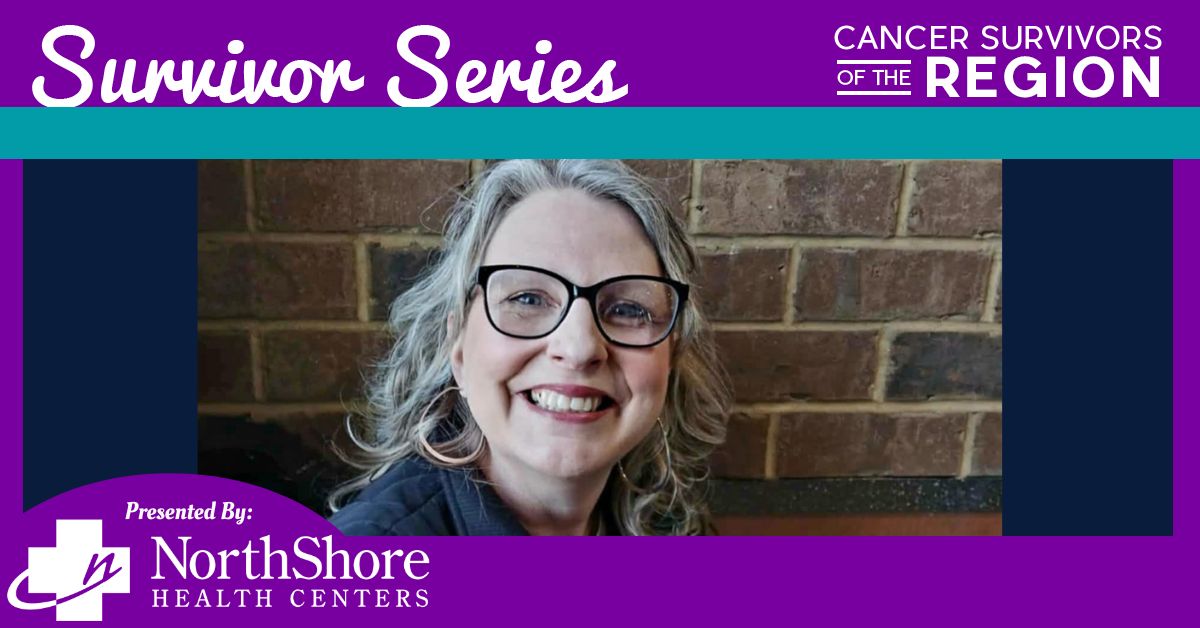
Mel Shelby Bendle’s cancer journey started in 2023 on her husband’s birthday, a day previously reserved for celebration, which will now be remembered as the day her life changed forever. From that day forward, their lives became divided into BC and AD: before cancer and after diagnosis.
Bendle practiced routine mammograms, leading to the discovery. Even though it was caught well and early, the treatment process could only be described as a grind. It was a test of her strength and a testament to her willingness to surrender to a higher power through faith. Bendle does not feel that her story is remarkable; she feels it is relatable.
Statistically, the threat of cancer is common. One out of every eight women will be diagnosed with breast cancer in her lifetime.
Bendle, surrendering to awareness of her newfound circumstance, looked around at the world for guidance. She turned to her community and put her faith in the hands of a higher power. She never underestimated the power of chunky earrings, applying the darkest shade of lipstick she owned, the bravery behind vulnerability, and the sheer and willful support of her newfound community.
“I never asked God, ‘Why me?’ I always thought, ‘Well, why shouldn’t it be me with one in eight women? Why would I wish this on somebody else?’ I did ask God the question of what,” said Bendle. “I asked, ‘What can I do with what I find myself battling?’ I coped, and I saw with a new perspective because it does not take long to look around a room or a restaurant or a store or in church and think one of these women, at least in their lifetime, will be diagnosed.”
Bendle was diagnosed with an aggressive form of breast cancer called Triple-Negative Breast Cancer, in which cancer cells lack hormonal receptors. Triple-Negative Breast Cancer cells are depleted of estrogen, progesterone, and HER2 proteins (Human Epidermal Growth Factor Receptor 2), which control cell division. HER2 proteins, when overexpressed, lead to uncontrollable cell division and excess cell growth, increasing the likelihood of cancerous cell growth.
“It was a physical battle, most definitely. Your body is changing and trying to evict something that shouldn’t be there,” said Bendle. “It’s also mental. For example, I didn’t really even process my journey until I was a year out of treatment, because you’re so focused on just living day-to-day that you don’t really take the time or have the capacity to process all that’s happened. I think instinctively, I made the choice that cancer was so beyond my control, that the only thing I could control was how I would journey.”
Those who have walked in her footsteps and journeyed through the battle of cancer know that time might feel as though it has stopped, but life does not stop moving. In the private moments following the brave moments, sitting in front of a friend’s mirror, head shaven and bare, Bendle would not let cancer define her.
“I dried my eyes out for about two minutes, and then I said to myself, this is ridiculous. It’s hair,” said Bendle. “I said, ‘God, I surrendered my life to you. Surely I can give you my hair.’”
Bendle, still in shock from her diagnosis, used the resources provided to her by her Nurse navigator at the Northwest Cancer Clinic. No longer was she burdened by choice; the community and local support made it easy for Bendle to reach this decision of choosing to stay local for treatment and support.
“The first few days feel like a hurricane that you don’t really even realize you are going through, as far as biopsies, MRIs, and meeting with surgeons and meeting your oncologist. All of that happens within four days. Life halts, and you become hyper-focused on something you never imagined would invade your calendar and life. You’re inspired by people who walk the journey before you and can speak into it. Those are the women who just become your lifeline through treatment. You surround and build your community with women who’ve been there. Their stories are so encouraging, it makes you feel like you can do this.”
Bendle took advantage of local programs offered by Northwest Cancer Clinic, such as yoga, art, and even a wig class, where she met other women who walked alongside and supported her on this journey. Her daughter, Elisabeth, was set to go off to college, and her husband was working to keep the family afloat. In those moments when she felt her at-home support system was weakened, the team at Northwest Cancer Clinic proved paramount in the success of treatment and aftercare. Bendle heralds the support of her Oncologist Gowri Ramadas at Northwest Cancer Clinic.
“While discussing my next steps, Dr. Ramadas turned directly to Elisabeth, looked her in the eye, shook her finger, and said, ‘Don’t you dare think of not going off to college. I’ve got your mom, now you go and make her proud.’ I’ll never forget that moment,” said Bendle. “Coming from my doctor in a strange way, it permitted Elisabeth not to feel responsible for me. I am eternally grateful for those few sentences Dr. Ramadas spoke. True to her word, she had me, and Elisabeth is now a junior and has made the Dean’s List every semester at Hope College. The irony doesn’t elude me that because of Dr. Ramadas, she didn’t have to question her path.”
Three years later, Bendle has grown from the stigma and only struggles with what it means to be a survivor, but recognizes that cancer changed her life for the better.
“I am a different person than I was three years ago. For that, cancer will always have a special place in my heart,” said Bendle. “ I now hold space for those on the journey. I see people in the grocery stores wearing scarves or with really short hair. I was an introvert, but now I’ll look at people and ask how they’re doing. There was a little girl in church a few weeks ago who had a scarf in front of me. She was like 12, and I slid my shirt just to the side so she could see my port, and I just said, “Me too.” She smiled so big, just to know that she wasn’t alone. It’s part of who I am. It’s not the only part of who I am, but definitely an integral part of my makeup.”
In her free time, Bendle serves at a local church and shares her wisdom about the brave women who walked before her and the incredible vulnerability and authenticity of her journey. Bendle is grateful for the woman she is today and for every person who played a role in her treatment and aftercare. These people made it possible for her to share her story today as a woman who beat the odds with grace, elegance, and poise.
