Survivor Series: Leighanne Bolinger

- By: Claire Kenney
- Last Updated: December 25, 2025





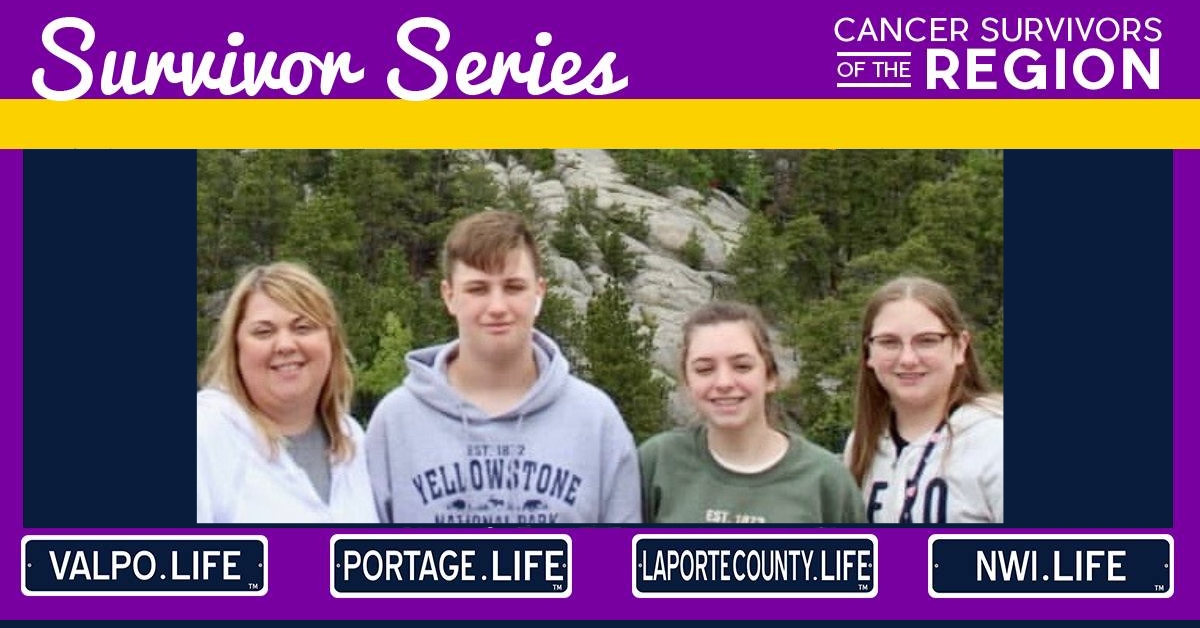
A few years ago, Leighanne Bolinger’s friend was diagnosed with breast cancer. Shortly after her friend’s diagnosis, at the encouragement of her friend, Bolinger scheduled a breast cancer screening.
The screening turned out to be positive. The cancer was stage two and a biopsy revealed that it was Invasive Lobular Carcinoma (ILC), which is the second-most common form of breast cancer. Notably, ILC is also challenging to detect because it does not grow in a lump formation. Instead, it grows in narrow, single-file lines.
“Fortunately for me because of the early detection, I did not have to get chemo or radiation,” Bolinger explained. “I had to take, and still take, medication.”
Out of extra precaution, Bolinger underwent a double mastectomy followed by reconstructive surgery.
Bolinger’s particular form of cancer stemmed from hormone-related complications. Due to this, and in lieu of not undergoing chemo or radiation, Bolinger must take medication for the next six years.
Bolinger said it was those around her that helped her get through the cancer. She had tremendous support from her local community.
“I have worked at the same place for many years and am very close to my colleagues,” said Bolinger. “They were so supportive during my diagnosis and continue to be. My co-workers, friends, and family are the individuals that really helped me forge through the road to recovery.”
When she was diagnosed with breast cancer, Bolinger was immediately connected with great medical care.
“While no one wants to go through cancer, the timing of my diagnosis could not have been better,” said Bolinger. “It was because of the timing that I was able to access great medical care and had tremendous support from my doctor.”
Bolinger credits her oncologist, Dr. Braik, for keeping her well-informed on her situation every step of the way – both as she battled the cancer and as she recovered.
“My last visit with Dr. Braik was very comforting,” she said. “He always has my best interest at heart, and I appreciate that.”
At the time of her breast cancer diagnosis, Bolinger’s children were only 15, 13, and 11 years old. Unfortunately after her diagnosis, one of Bolinger’s children passed away.
“We really went through a lot as a family,” said Bolinger. “The past few years saw a couple of very difficult situations for us.”
Through it all, what remains one of Bolinger’s biggest focuses is others. In particular, she strives to use her own breast cancer diagnosis to drive awareness to the importance of regular breast cancer screenings and early cancer detection.
“If I can get at least one person just to know that early detection is key through the example of my own experience, I will feel like I’ve done my job,” said Bolinger. “Get your screenings. It’s so, so important.”
Bolinger’s story is an example of the importance of early cancer detection. It is also an example of the importance of grit, resilience, and the difference genuine support can make when one is going through a difficult situation. By supporting each other, it opens a door for people to more clearly envision how we can survive some of life’s greatest challenges.