Anthropology Professor Consulting for Students Robotics Teams Competing in Lego STEM Challenge
- By: Indiana University South Bend
- Last Updated: October 15, 2025
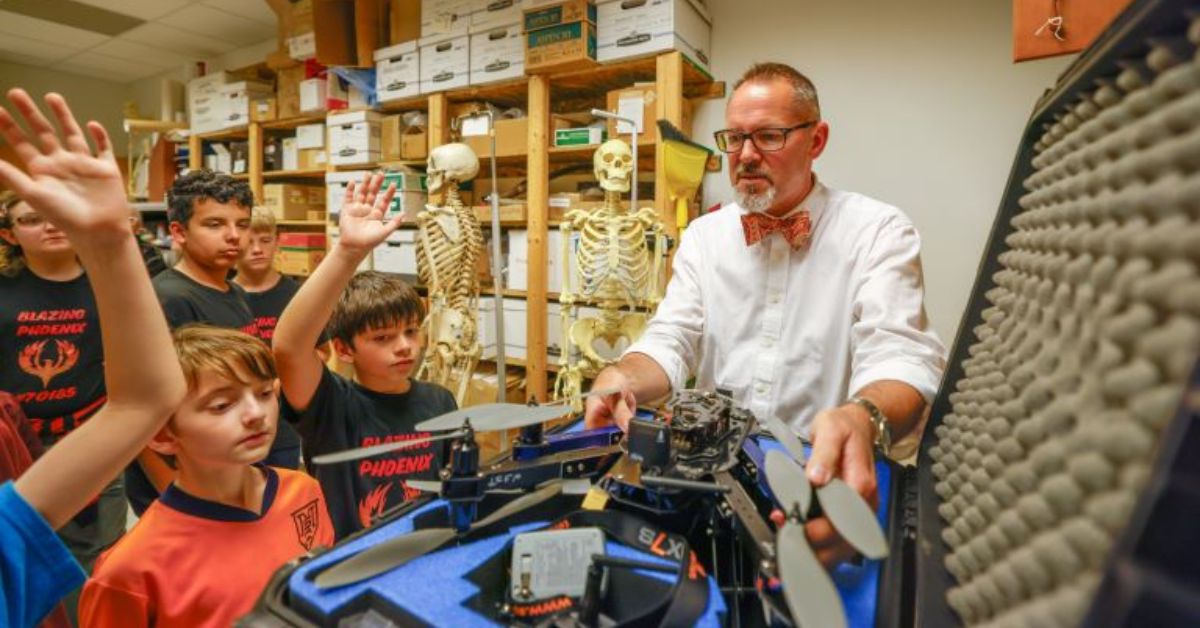
Dr. Jay VanderVeen, professor in the Department of Sociology & Anthropology at Indiana University South Bend, is lending his unique expertise as both a practicing archaeologist and LEGO® enthusiast to student teams preparing for 2025 FIRST® LEGO® League (FLL) season, a worldwide STEM challenge.
The FLL program challenges students to apply STEM concepts in real-world contexts, combining robotics, teamwork, and research. This year’s archaeological theme “Unearthed” encourages students to explore history through excavation, artifact analysis, and cultural discovery.
“It’s a great way to show how our research specialties can interact with the broader community in unexpected and meaningful ways,” says VanderVeen.
VanderVeen has experience in FLL coaching, building complicated Lego and using robots, and is formally trained as a Qualified Practicing Archaeologist, making the combination a great fit for the needs of challenge this year.
He was previously a FLL coach for Mary Frank Elementary in Granger while his child was involved in the program, and has volunteered for Skype-a-Scientist, a non-profit program that connects classrooms and student groups with real-life scientists via video calls, for a decade.
“We loved the program, and it fits in my ongoing efforts to public science outreach,” says VanderVeen. “I didn’t know that the FLL theme this year was archaeology until I started getting inundated with requests for videoconference meetings facilitated by Skype-a-Scientist. Then I reached out to coaches and schools in the area offering my services,” says VanderVeen.
VanderVeen is currently working with 18 teams from across the state, the country, and the world this fall. He meets with the teams for an hour or so to answer their questions and describe what happens in archaeological investigations, as well as respond to the emails from their coaches with follow-up questions and to brainstorm ideas.
He recently welcomed two teams from The E3 Robotics Center in Elkhart to the campus’s Material Culture Lab and has made site visits to teams at the Granger Exploration and Robotics Studio (GEARS). Additionally, he’s met with six teams from around the U.S. via Zoom and is in ongoing contact with four more based in Concord.
“The students get to hear from a scientist what it’s like to do research, from an adult what it’s like to have adventures, and from an educator what it’s like to remain curious and ask questions,” explains VanderVeen. “They ask about favorite finds in the field, but also about what challenges are faced, problems are encountered, and current practices that may be improved.”