After Images Counseling Program uses art counseling to support long-term grief healing

- By: Alyssa Chartrand
- Last Updated: January 19, 2026
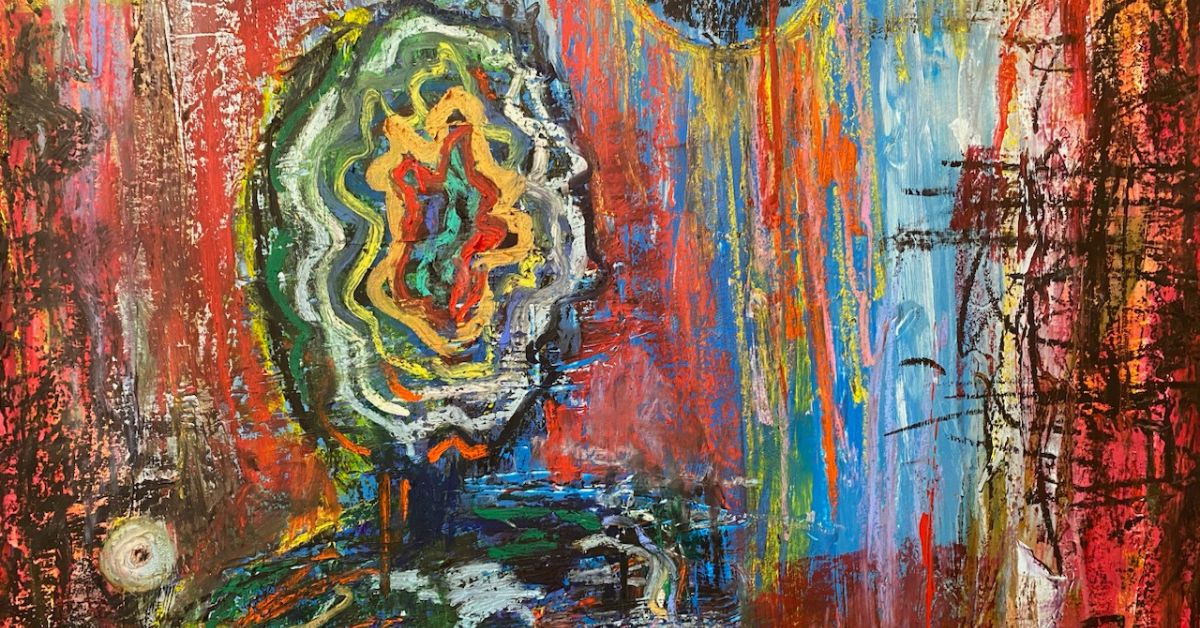
The After Images Art Counseling Program at Center for Hospice Care provides ongoing, one-on-one bereavement counseling through a combination of visual art-making and talk therapy. The program was created nearly 30 years ago by licensed mental health counselor David Labrum, who serves today as an art counselor for Center for Hospice Care’s After Images program. This program primarily serves adults grieving the death of a loved one, most often parents who have lost a child.
“Most people don’t think they’re suitable for a program like this because they don’t have art experience, but once they get in, they’ll generally stay,” Labrum said. “They’re inspired through their desperation amidst acute grief and trauma. It’s not a six-to-eight session program; you are able to come as long as you feel you’re being helped.”
Labrum, a practicing professional artist, pioneered a unique approach to healing by merging the fine arts with counseling. After earning both a bachelor’s degree and a Master of Fine Arts, Labrum pursued a master’s degree in counseling and became a licensed mental health counselor in Indiana. His dual education led him to art counseling as a way to help individuals communicate.
“A natural bridge for me was to utilize art as a way of communicating and working with people who are grieving,” Labrum said. “I married my academic background and my professional background. I am not an art therapist, but this is how I came to be an art and talk counselor.”
Labrum founded the After Images program, initially launching the program with independent grants before Center for Hospice Care adopted it. Today, the program operates in a specialized studio within the organization’s bereavement center, where Labrum leads weekly sessions that combine conversation and visual creation.
“The program consists of participants coming in on a weekly basis for their own designated day and time,” Labrum said. “They spend an hour and a half to two hours here. There is a component of talking and then of painting and drawing. Those two come together to create their narrative.”
The studio focuses on flat work, including drawing and painting with acrylics, oil pastels and dry pastels. Participants work on the walls rather than tables, each claiming a designated section of space. Labrum does not provide formal art instruction or assign projects. Avoiding instruction allows participants to maintain autonomy and engage with the process on their own terms.
“I want them to teach themselves,” Labrum said. “This is what gives them autonomy and a sense of them doing it versus doing it for somebody else. Most people do not think they’re suitable for a program because they don’t have art experience, but they find their own mark and eventually find their inspiration later on.”
Although sessions are conducted one-on-one, artwork remains visible throughout the studio. The intention is to allow participants to view others’ work to create a sense of shared experience and encourage participation without formal group interaction. After completing a piece, participants discuss their work and experience with Labrum, who serves as both counselor and listener rather than a teacher.
“When they walk in, they can see everybody else’s work and that gives them permission to begin,” Labrum said. “It is like a group because they have the opportunity to get to know other people who are involved in the art-making process. After they finish the work, they share their experience with me. I’m the keeper of their stories. I am a safe person where they can divulge their thoughts and their feelings as they need to.”
Labrum supports people facing loss and life-limiting illness, including at RiverBend Cancer Services, where he helps patients reconnect with presence and vitality. He has documented long-term experiences in visual narratives like Margaret Gloster’s “The Hole in Me Since the Day You Died” and Maggie Bair’s “I Can Breathe Now,” showing how grief evolves over time. Through his work, Labrum advocates for creative support for those navigating serious illness and loss.
“I want to encourage other practitioners to utilize this visual component, which is so important and vital,” Labrum said. “My legacy of doing this for such a long period of time is that I was able to do it, and that it works. People are helped, or they help themselves, through this process.”
For more information about the After Images Art Counseling Program, contact the Center for Hospice Care’s bereavement services at cfhcare.org/bereavement, or call the Joel and Elizabeth Welch Life Transition Center in Mishawaka at (574) 255-1064. Labrum also welcomes direct inquiries at his office at (574) 243-2067. The studio is located on Center for Hospice Care’s campus at 501 Comfort Place, Mishawaka, Indiana 46545.
