Over a century of change at Bartholomew Funeral Home

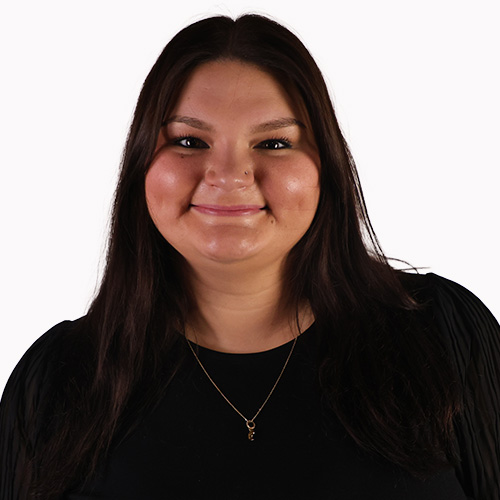
- By: Samantha Marino
- Last Updated: January 7, 2026


Funerals have become such an integral part of how communities honor life and loss that it can be easy to forget they were not always organized the way they are today. What is now a carefully guided process rooted in compassion and professionalism began much more simply, shaped by necessity, tradition, and the realities of everyday life. Bartholomew Funeral Home, the oldest privately-owned funeral home in Valparaiso, illustrates that evolution clearly.
The story begins in 1892, when C.W. “Charlie” Bartholomew opened what would become C.W. Bartholomew Funeral Home. At the time, the business was not a funeral home in the modern sense. Like many early funeral operations, Bartholomew’s work grew out of furniture making.
“Many funeral homes started as furniture makers,” said Kyle Newhard, office manager. “They were making coffins for people who passed away, and as modern mortuary science came to be, they realized there was a greater need for funeral service than furniture.”
As embalming and organized funeral services gradually became common in the early 20th century, the business evolved. World War II helped to accelerate that shift. The large-scale embalming and transport of fallen service members helped make embalming the norm and pushed the professionalization of funeral homes across the country.
Locally, Bartholomew Funeral Home moved from the courthouse square to 15 N. Washington St., now home to Langer and Langer Attorneys, and later to 22 N. Washington St., remaining within a few blocks of its original location. In 1946, Doc Bartholomew relocated the funeral home to 102 Monroe St., its current location. Three years later, his son Bob joined the business after serving in the Navy during World War II, remaining for decades before selling it to Michael J. Newhard in 1997.
Bartholomew Funeral Home’s oldest written records, dating back to 1906, reflect a time when rail transport and horse-drawn carriages were standard.
“If someone passed away and needed to be transported, it might be by rail or carriage,” Newhard said. “Today, if someone passes away here but needs to return to California, we arrange air transportation. The evolution is incredible.”
Communication has also transformed. Before telephones, families had limited ways to notify funeral homes of a death, particularly at night.
“If someone passed away overnight, families would hang a small chalkboard or plaque outside the home with the name, address, and cause of death,” Newhard said. “The next morning, staff would travel through town checking plaques. Funeral directors often lived in the home, making them available at all hours. That would probably shock someone from the early days. Now we’re a 24-hour business, 365 days a year, and people can reach us instantly.”
The profession itself has expanded far beyond its beginnings. What once involved providing a coffin grew to include embalming, organizing visitations, coordinating religious services, arranging military honors, and managing increasing amounts of paperwork.
“In the past, a doctor might write a death certificate by hand, and that was it,” Newhard said. “Today, there’s paperwork for the funeral home, the cemetery, the health department, and other agencies. Every detail requires coordination.”
While logistics have evolved, the role of funeral homes has shifted even more. In the earliest days, the work was transactional; today, it’s deeply personal.
“It went from selling a box to serving families,” Newhard said. “Now it’s about helping people through one of the hardest moments of their lives. You never know someone else’s story. Every family dynamic is different, and every loss is unique. Our job is to listen, empathize, and help people as best we can.”
Families’ ways of honoring loved ones have also changed. Burial was once nearly universal, while cremation was rare.
“Originally, almost everyone was buried,” Newhard said. “Cremation was really only used for people who had no means. Today, burial and cremation are chosen in nearly equal numbers, reflecting changing attitudes and personal preferences.”
Funeral services have become more streamlined and personalized. Where services once lasted several days and featured elaborate floral displays and formal attire, many families now opt for simpler gatherings.
“Many years ago, everyone wore black. Men wore suits or even tuxedos. Now you might see jeans and a polo shirt. What matters is what feels right for the family,” Newhard said.
Bartholomew Funeral Home also sees education as part of its role in the community.
“Death and funerals still feel taboo to a lot of people,” Newhard said. “We don’t want to be a mystery. If someone has questions or is curious about how something works, we want them to feel comfortable calling or stopping in.”
From chalkboard notices outside to cellphones and 24-hour availability, from horse-drawn carriages to air travel, Bartholomew Funeral Home has adapted to more than a century of change while remaining rooted in service, compassion, and connection.
“We’ve been here for more than 100 years,” Newhard said. “We want to be here for another 100 years and more, continuing to serve and support our community in whatever way they need.”
For more information on Bartholomew Funeral Home, you can visit bartholomewnewhard.com.
